

Pathik Shah
FCA, CAMS, CISA, CS, DISA (ICAI), FAFP (ICAI)
Why Money Laundering Is Every Business’s Problem
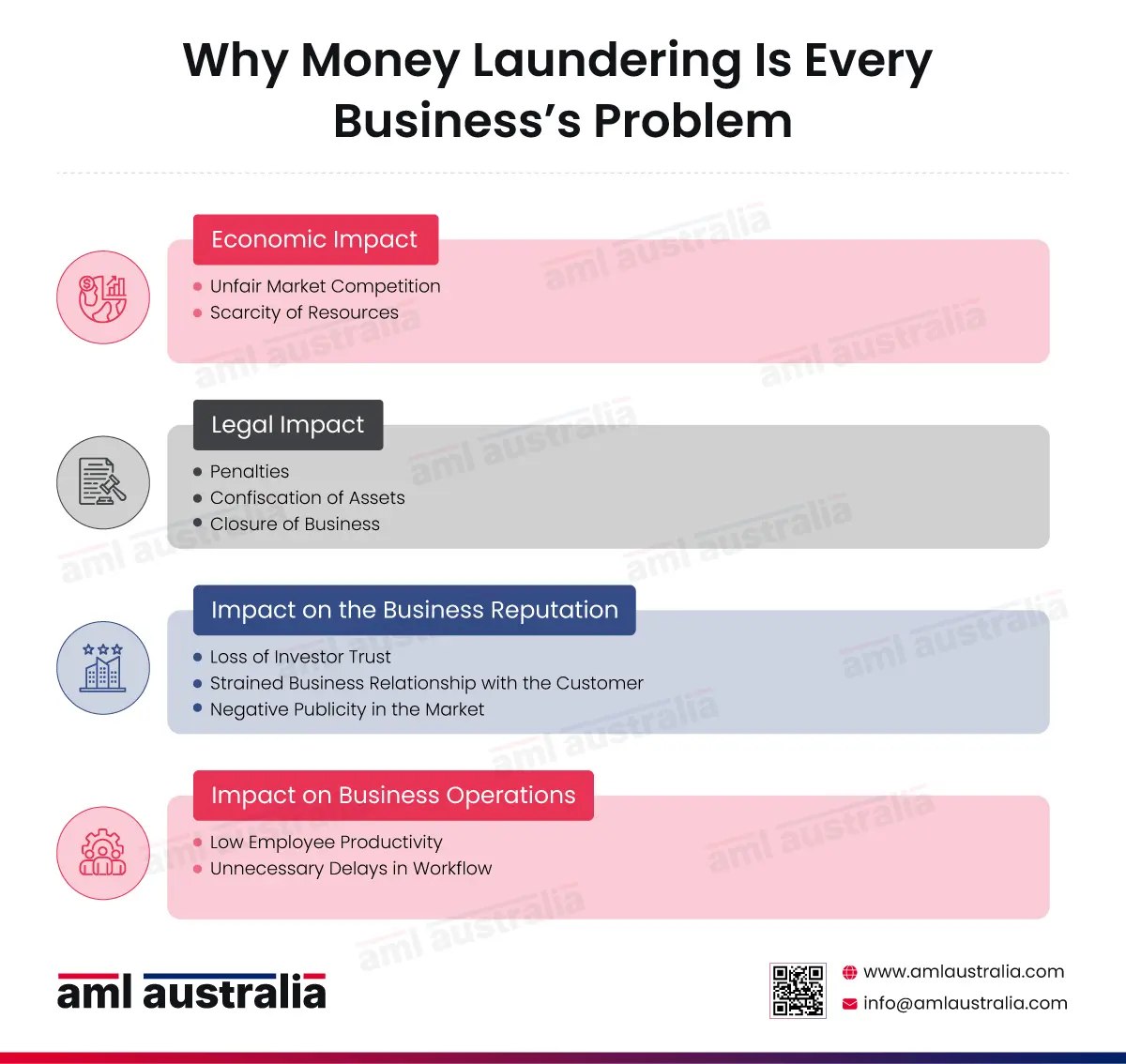
Money Laundering (ML) can have far-reaching consequences for a nation’s business sector. Let us understand why money laundering is a problem for every business, whether regulated or not. This illustration specifically focuses on the impact of money laundering on businesses in the absence of effective Anti-Money Laundering (AML) compliance controls.
Economic Impact
Businesses suffer economic consequences due to:
 Money launderers often resort to typologies such as creating front companies and shell companies to conceal funds. Combining their illegitimate and legitimate funds, they lower the market prices of specific products or services, creating a false bubble of competition that can drive out legitimate businesses.
Activities like money laundering can cause the diversion of funds from financial institutions, leading to a scarcity of resources, such as loans for legitimate businesses.
Legal Impact
Since illegal activities such as money laundering pose a threat to a nation’s financial integrity, nations across the world have adopted laws and regulations to counter money laundering activities.
Regulated businesses have to abide by these regulations and carry out risk assessments, conduct KYC and due diligence of their customers, and allocate a significant budget and resources to comply with AML/CFT compliance requirements. Non-compliance can result in fines and penalties, confiscation of assets, and the closure of business.
Impact on Business Reputation
A business’s association with activities like money laundering can significantly impact their brand image by causing the following:
An environment of distrust amongst persons investing in such businesses can create a chain of economic impact for businesses.
Many consider that even bad publicity is still publicity. However, if a brand name gets associated with grave offences, like money laundering, it may drive away customers due to factors like lack of transparency and credibility.
Singular businesses are often a part of a broader supply chain. Therefore, any adverse information about a business can lead to bad publicity among market participants such as manufacturers, suppliers, or distributors.
Impact on Business Operations
Once a business’s revenue sources are impacted, it creates a domino effect, impacting other aspects of a business, such as its day-to-day operations:
Dwindling revenue and poor brand reputation can impact employee morale and work productivity
Low employee productivity can, in turn, cause unnecessary delays in the workflow
Disrupting the business’s core objectives.
Countering the Consequences of Money Laundering to Businesses
Illicit activities such as money laundering can have muti-faceted consequences that are often interlinked to one another. A sound understanding of the impact of money laundering activities can be useful in the proper implementation of Anti-Money Laundering (AML) compliance measures.