

Pathik Shah
FCA, CAMS, CISA, CS, DISA (ICAI), FAFP (ICAI)
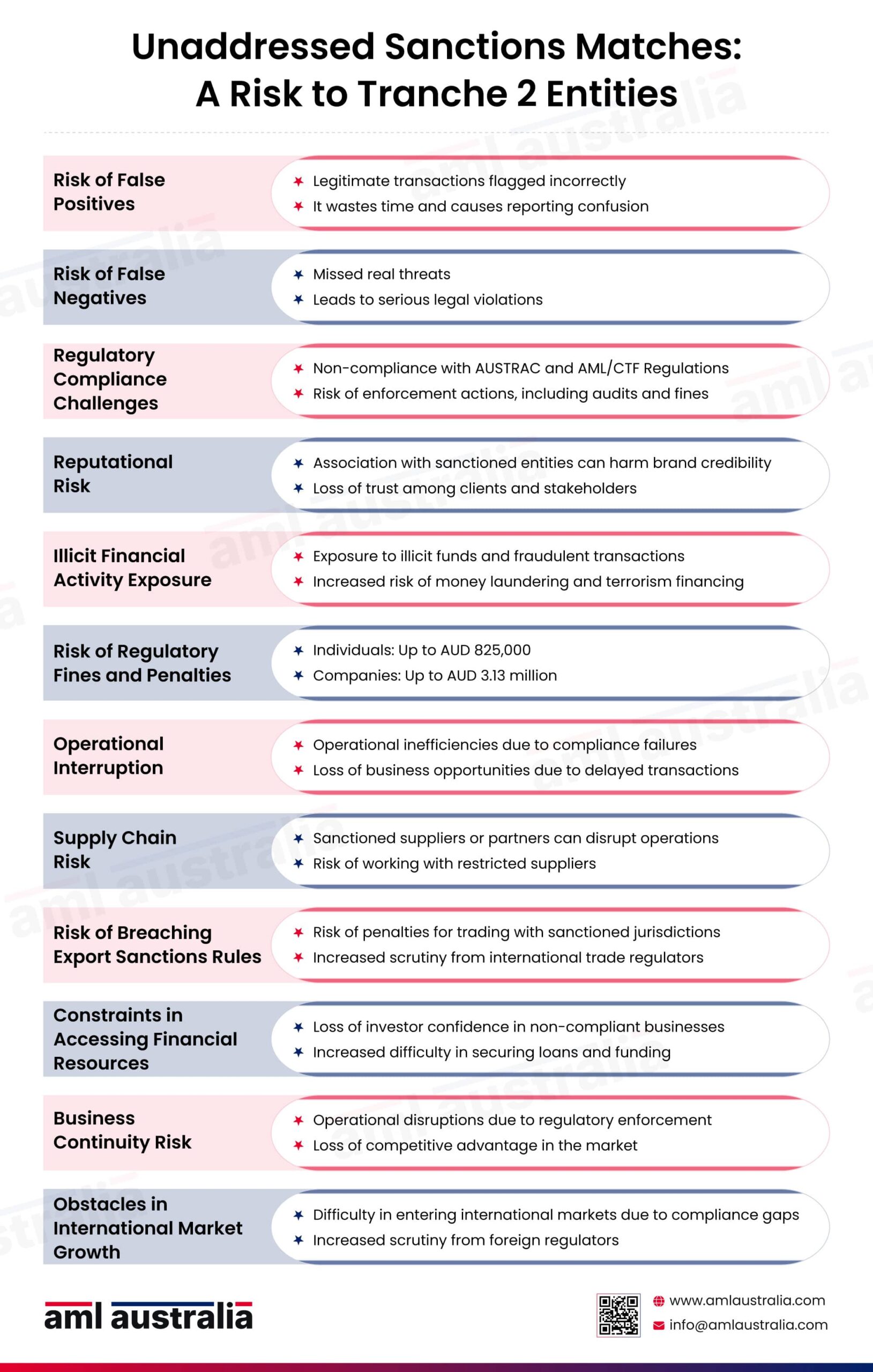
Reporting Entities in Australia not only require having in place methodology for conducting sanctions screening, but also need to ensure that there are no unaddressed sanctions matches. Unaddressed sanctions matches bring along a series of obstacles and increased TF and PF risks to the Tranche 2 Reporting Entities, which are discussed elaborately in this infographic.
Unaddressed Sanctions Matches: A Risk to Tranche 2 Entities
Sanctions screening is a process that check individuals, entities, and transactions against United Nations Security Council (UNSC) Sanctions list and Consolidated list maintained by Department of Foreign Affairs and Trade (DFAT). Failure to properly address these matches can expose businesses to significant risks.
Following is the list of various kinds of risks that a Tranche 2 Entity might face due to unaddressed matches in Sanctions Screening.
Risk of False Positives
Sanctions screening tools and software can sometimes generate false positives, where legitimate transactions are incorrectly flagged. Tranche II Entities need to investigate the results and disambiguate those incorrect matches. Proper identification ensures that appropriate action is taken on true positives, such as filing a Suspicious Matter Report (SMR) to The Australian Transaction Reports and Analysis Centre (AUSTRAC). Failing to address false positives may lead to unnecessary filings, causing confusion and misallocation of resources.
Risk of False Negatives
The more critical risk arises from false negatives, where Tranche 2 Entities fail to detect actual sanctioned individuals or entities. Such oversight can result in unintentional dealings with prohibited parties, leading to violations of the Targeted Financial Sanctions (TFS) framework and attracting severe penalties.
Regulatory Compliance Challenges
Sanctions screening is an obligation under the Anti-Money Laundering and Counter-Terrorism Financing (AML/CTF) Amendment Act 2024. Inadequate screening or failure to conduct it effectively may constitute regulatory non-compliance. Therefore Tranche 2 Entities must maintain a robust screening process to ensure compliance and mitigate legal and financial risks.
Reputational Risk
Engaging with sanctioned individuals or entities, even unwittingly, can severely damage a business’s reputation. Clients and business partners expect adherence to legal and ethical standards, and any breach can erode trust and business relationships.
Illicit Financial Activity Exposure
Inadequate sanctions screening may lead to exposure to illicit transactions involving sanctioned entities and increases the risk of facilitating financial crimes, including money laundering and terrorism financing.
Risk of Regulatory Fines and Penalties
Non-Compliance with Sanctions measures may impose hefty fines to the Reporting Entities. Individuals may face fines up to 2,500 penalty units (approximately AUD 825,000), while corporations can incur fines up to 10,000 penalty units (approximately AUD 3.13 million).
Operational Interruption
Sanctions violations can result in operational disruptions, including the freezing of assets and suspension of business activities. Such interruptions can lead to financial losses and damage to business operations.
Supply Chain Risk
Failure to promptly identify sanctioned individuals and entities across sanctions lists weakens supply chains, increasing the risk of businesses unknowingly working with restricted suppliers and facing regulatory penalties. This oversight disrupts production and distribution, potentially enabling illicit activities within the supply chain.
Risk of Breaching Export Sanctions Rules
Businesses engaged in international trade must adhere to export control regulations to ensure compliance. Tranche two reporting entities are responsible for screening customers, suppliers, and third parties against global sanctions lists. Neglecting this step can lead to transactions involving restricted products or dual-use goods with sanctioned entities, resulting in export control violations.
Constraints in Accessing Financial Resources
Non-compliance with sanctions can affect a business’s ability to secure funding. It will lead to loss of investor’s confidence. Financial institutions may be hesitant to engage with entities that have a history of sanctions violations, limiting access to capital.
Business Continuity Risk
Violations of sanctions can severely impact a business’s long-term stability. Legal consequences, financial penalties, and damage to reputation can disrupt operations and hinder sustainability. Such setbacks may also erode an entities competitive edge in the market.
Obstacles in International Market Growth
Businesses seeking international expansion must comply with global sanctions regulations to avoid obstacles in entering foreign markets. Establishing a robust sanctions compliance program is essential in mitigating expansion risks. Tranche 2 entities should conduct due diligence before granting operational permissions. Any identified non-compliance can result in restrictions, as countries prefer to host businesses with strong regulatory adherence within their jurisdictions.
Conclusion
Anti-Money Laundering and Counter-Terrorism Financing (AML/CTF) framework is evolving in Australia to include Tranche 2 entities, such as real estate professionals, lawyers, accountants, conveyancers, trust and company service providers and dealers in precious metals and stones.
From July 2026, these Tranche Reporting Entities have obligation to implement robust Sanctions screening processes for effective implementation of their AML/CTF compliance.
For Tranche 2 entities in Australia, implementing effective sanctions screening processes is not just a regulatory requirement but a critical component of AML/CTF compliance. By proactively addressing potential matches and adhering to compliance obligations, businesses can protect themselves from legal, financial, and reputational risks.