

Pathik Shah
FCA, CAMS, CISA, CS, DISA (ICAI), FAFP (ICAI)
AML/CTF Real Estate Reforms: At a Glance
- From 1 July 2026, Real Estate agents, developers and conveyancers must comply with AML/CTF laws.
- Compliance covers brokering, buying, selling, or transferring property with a link to Australia.
- Certain transactions, like private or incidental sales, are exempted.
- AUSTRAC supervision requires Enrolment, Customer Due Diligence (CDD), Record Keeping, and Reporting.
- Businesses should prepare now to avoid penalties and remain audit-ready.
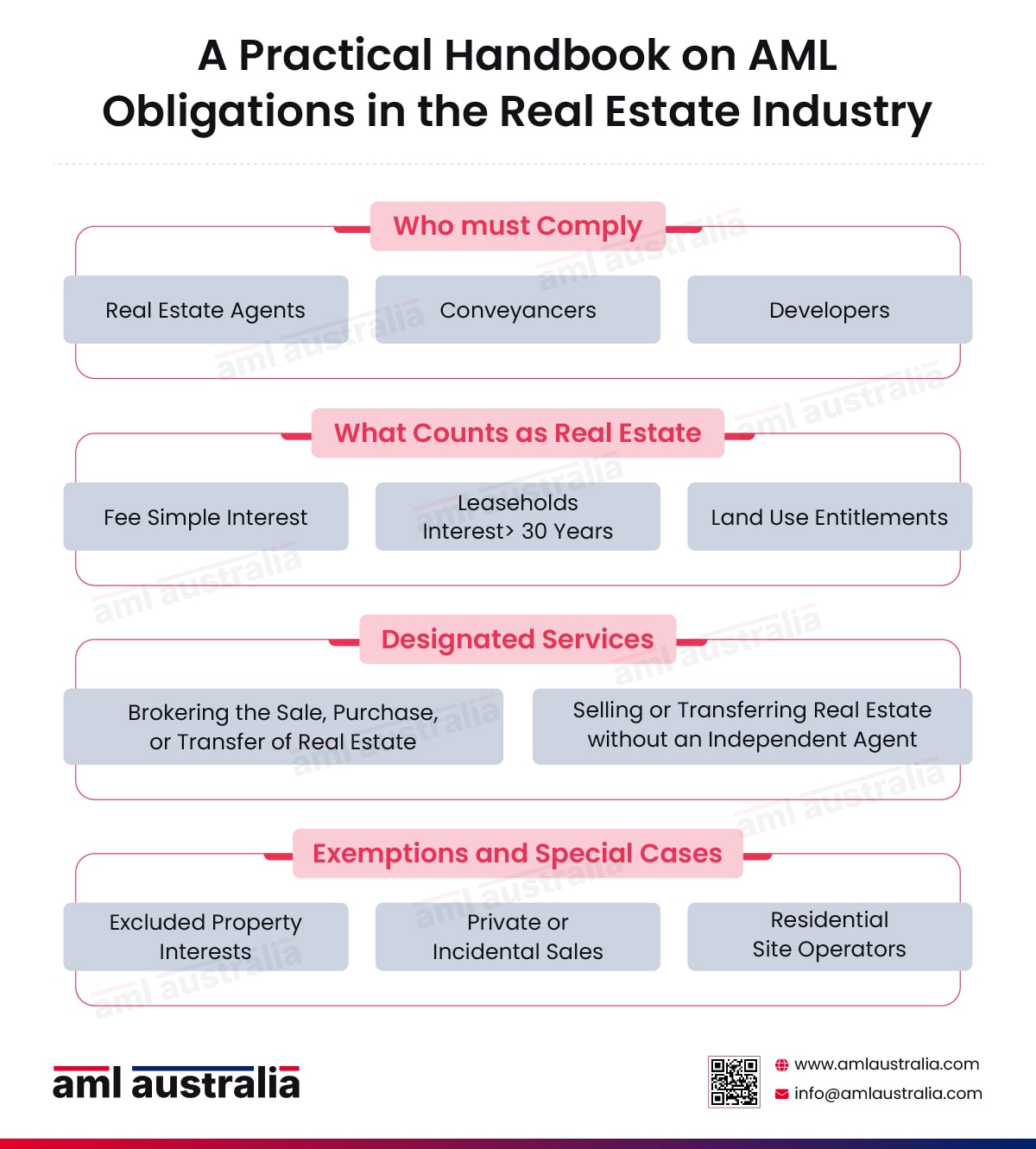
Australia’s Real Estate industry is preparing for a major change. Starting 1 July 2026, property professionals will be required to follow new Anti-Money Laundering and Counter-Terrorism Financing (AML/CTF) obligations. These reforms will reshape how agents, developers, and conveyancers handle property transactions linked to Australia.
New AML/CTF Rules for Real Estate Agents in Australia: What Do They Mean for You?
Real Estate businesses involved in buying, selling, or transferring property will soon be regulated under the new AML/CTF reforms. This means:
- Enrolling with AUSTRAC
- Carrying out Customer Due Diligence (CDD) before starting a service
- Keeping proper transaction records
- Reporting suspicious matters or cash transactions that meet certain thresholds
These rules apply whether property is sold for consideration or transferred without payment, ensuring that all relevant transactions are regulated.
Who Must Comply with Australia’s Updated AML/CTF Laws in the Real Estate Sector – and When Do They Start?
The new AML/CTF regulations apply to businesses and professionals providing Real Estate services with a geographical link to Australia. Key categories include:
- Real Estate Agents: Agents assisting in property sales or purchases.
Example: Residential and commercial agents. - Conveyancers: Professionals handling settlements or title transfers.
Example: Licensed conveyancers and solicitors. - Developers: Businesses selling off-the-plan units, house/land packages, or land blocks in new subdivisions.
Example: Property development companies.
Effective Date: 1 July 2026. Businesses should start preparations in advance to ensure full compliance.
How AUSTRAC Defines ‘Real Estate’ Under the AML/CTF Regulations?
The term “Real Estate” includes ownership interests in land and certain leasehold or ownership-like arrangements. Key definitions are:
- Fee Simple Interest: Standard land ownership
- Leasehold Interest > 30 Years: Long-term leases, for e.g., 99-year leases in the Australian Capital Territory
- Land-Use Entitlements: Ownership via shares or units combined with leases/licenses
Real Estate Services Covered Under the New AML/CTF Framework
The AML/CTF reforms identify specific Real Estate services as “Designated”, meaning they trigger compliance obligations. Each type of service has a defined starting point for when your AML/CTF duties begin.
Brokering the Sale, Purchase, or Transfer of Real Estate
Under the AML/CTF Amendment Act 2024, an entity provides a Designated Service when it brokers property transactions as part of a business.
|
Item |
Designated Service |
Customer(s) |
|
1 |
Brokering the sale, purchase, or transfer of Real Estate |
Both the buyer and seller |
Key Points:
- A transaction doesn’t need a payment to trigger AML/CTF duties.
- Negotiating or acting as an intermediary counts as brokering.
When the Service Begins:
- Seller’s Agent
- The service begins once an agreement to broker a sale or transfer is signed.
- The buyer also becomes a customer after their offer is accepted.
- Buyer’s Agent
- The service begins once an agreement to locate or identify a property is signed.
- The seller also becomes a customer once the transaction proceeds.
- Auction Sales
- The service begins after the fall of the hammer.
- Initial CDD may be delayed if it disrupts the auction process.
Selling or Transferring Real Estate Without an Independent Agent
This Designated Service applies when property is sold or transferred as part of a business, but without an external Real Estate agent.
|
Item |
Designated Service |
Customer(s) |
|
2 |
Selling or transferring Real Estate in the course of carrying on a business selling Real Estate, where no independent agent is involved |
Buyer or transferee |
Examples:
– Developers selling house-and-land packages.
– Businesses selling apartments off the plan or vacant land.
These obligations apply even if the transfer occurs without payment.
Excluded Activities:
– Incidental property sales by businesses (e.g., selling one’s office premises).
– Private residential sales.
When the Service Begins:
AML/CTF obligations begin once the contract of sale or transfer is signed, as from this point, the property deal becomes binding.
Which Real Estate Activities are Exempted from the New AML/CTF Compliance Rules?
Not every Real Estate activity falls under AML/CTF supervision. AUSTRAC has clarified several exclusions to prevent unnecessary compliance for low-risk transactions.
- Excluded Property Interests
- Leases of 30 years or less.
- Easements, restrictive covenants, and mortgagee rights.
- Movable or temporary dwellings (e.g., caravans).
- Private or Incidental Sales
- Personal or family transfers not part of a business.
- Sales by individuals without commercial intent.
- Residential Site Operators
- Applies only if operators broker, or act as agents for qualifying Real Estate.
- Granting or re-granting leases under residential site agreements is not a transfer under the AML/CTF Act.
Frequently Asked Questions (FAQs)
1. When do the new AML/CTF Rules for Real Estate businesses come into effect?
The updated AML/CTF rules for Australia’s Real Estate sector will apply from 1 July 2026. From this date, agents, conveyancers and developers involved in the sale, purchase, or transfer of property must comply with the new AML/CTF regulations and related rules.
2. What steps must Real Estate professionals take before the rules start?
Businesses should prepare early by:
- Registering with AUSTRAC as a Reporting Entity.
- Developing an AML/CTF Program.
- Training staff to identify suspicious activity and complete Customer Due Diligence.
- Review record-keeping procedures to ensure transactions and verification data are retained properly.
3. What does the term “Designated Service” mean under the new Real Estate rules?
The term “Designated Service” refers to activities such as brokering, selling, or transferring Real Estate as part of a business arrangement.
- Brokering involves acting as an intermediary between buyers and sellers.
- Selling or transferring covers direct transactions made by developers or businesses without external agents. Both types of services are covered, even when the transfer occurs without monetary payment.
4. Are private or family property transfers included under these reforms?
Private, one-off, or family property transfers that are not part of a Real Estate business are generally excluded. These reforms target commercial Real Estate activities carried out by registered professionals or property businesses.
5. What happens if a business fails to comply with the new AML/CTF rules?
Non-compliance may result in AUSTRAC enforcement action, including:
- Administrative penalties and fines,
- Increased audit or supervision.
6. Will these new AML/CTF obligations apply to foreign property transactions?
Yes, but only if the Designated Service has a geographical link to Australia. For instance, an Australian-based agent brokering property abroad for an Australian buyer may still have reporting and verification duties under the AML/CTF Act.
7. Can compliance be automated through digital tools or RegTech solutions?
Many agencies are adopting RegTech platforms for electronic ID Verification (eKYC), Transaction Monitoring, and automated risk scoring.